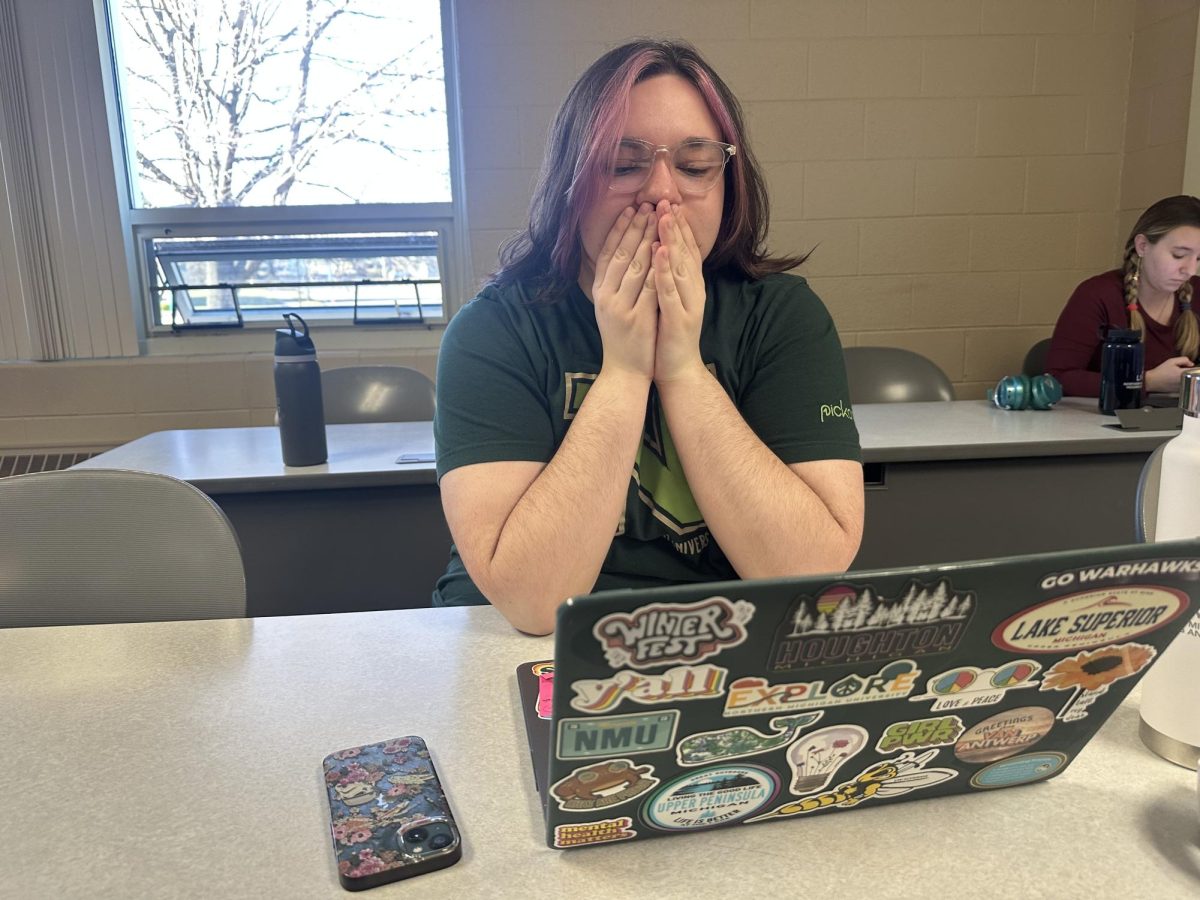


I started college on scholarship as a collegiate runner. I was studying journalism, but as an athlete, my major was simply a passing thought. After leaving the sport that I thought defined me, I finally had a chance to look inward and discover my interest in science. The proposition to change my major was humbling, given that my brain was wired solely to English and writing.
I am not bold enough to claim that I have escaped that way of thinking, even after a year of biology classes. All I can confidently say is that writing scientific papers is no struggle of mine.
Still, I go home to an obsessive cycle of thoughts that plague me— “I am just not built to be a biologist.”
Every study strategy has made an appearance in pathetic attempts to memorize content— active recall, personal study guides and notecards that seem to pile higher every day. My GPA has not dropped yet, but it trembles at the sight of physics and organic chemistry next semester.
As a disclaimer, I am not here to preach about how STEM majors are more difficult than humanities. As someone in both, I understand that the difference is in the type of workloads. I’d go as far as to argue that writing-heavy classes can be more difficult, if the cards are played right.
STEM is a different type of studying, though, that requires an amount of memorization and conceptual understanding that I am not used to.
I do not believe that I am not smart enough to succeed in this field. I do believe that my lack of confidence has hindered my ability to reach my full potential. In my head, I am still my best self when I am reading a pretentious book and writing obnoxious streams of consciousness in my journal (that hasn’t been touched since July, mind you).
Insecurity is one hell of a drug.
I don’t want to be the type of student that hides her computer when an exam is being reviewed in class. I am terrified that my grades will tumble down like dominoes, simply because I am “an English person.”
I have first-hand experience of the sheer power that self-consciousness has. Sure, some people are better at some subjects than others, but it isn’t a limiting factor. In my opinion, a lot that goes into having a “STEM” mind is having confidence.
I wish this piece ended in triumph, exclaiming how I escaped my fear of failure— but I haven’t. Imposter syndrome is very real, and debilitating. However, I do know that I am capable of succeeding in STEM. It isn’t an end all, be all if I like reading and writing too.
When telling people my majors, I always preface that I recognize how weird it is that I combined both journalism and biology. In reality, though, this isn’t odd at all— combining communications experience with a STEM degree can make all the difference. Now, all I have to do is be brave enough to stick through biology as I learn how to navigate it.