The sound of weights crashing and athletes grinding through final reps has taken on new life inside NMU’s renovated weight room. But beyond the upgraded equipment and expanded space, the transformation is doing more than just improving aesthetics, it’s reshaping how NMU’s sports performance staff develops athletes behind the scenes.
While the facility itself stands out, the work that happens inside it often goes unnoticed.
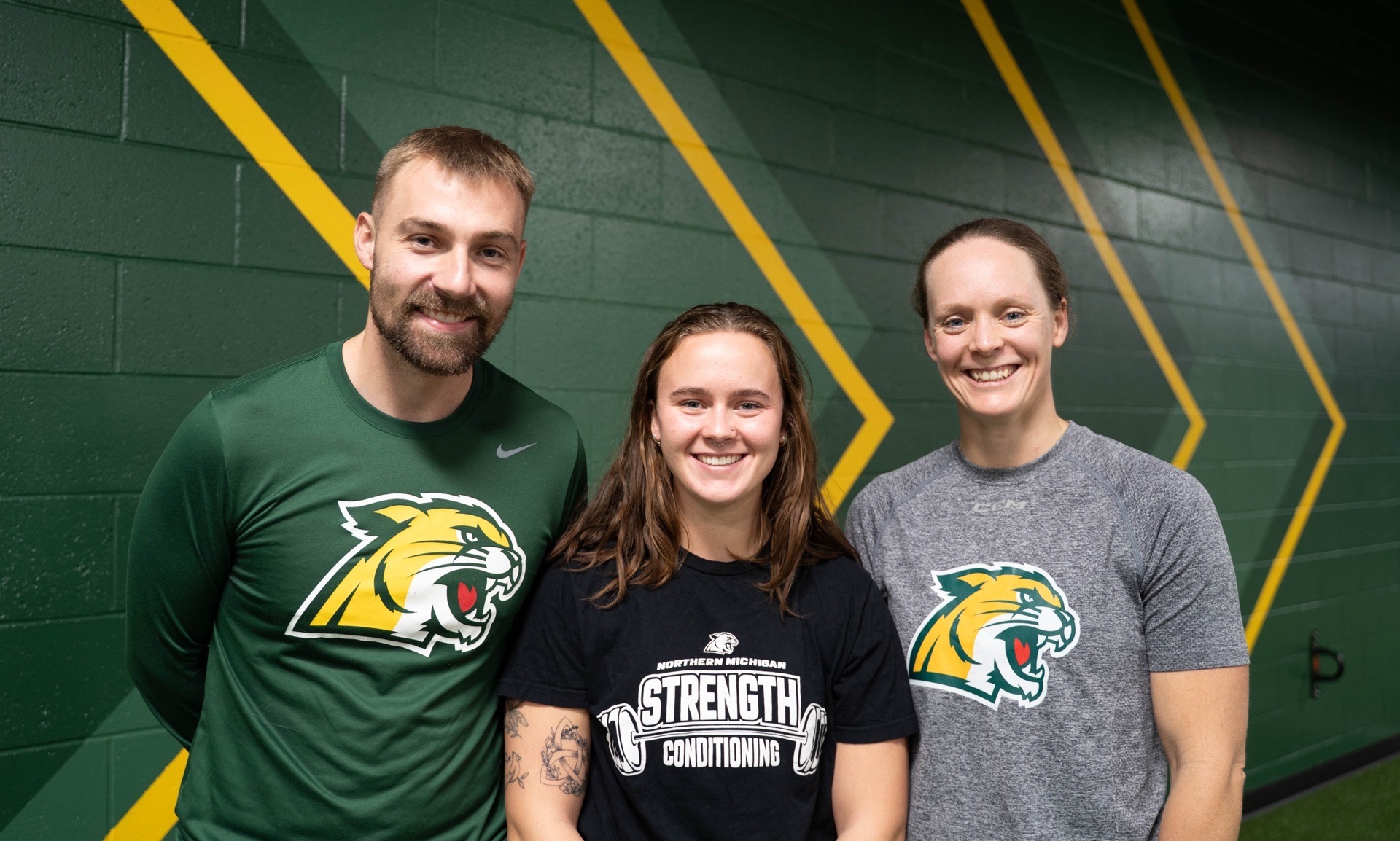
“It’s controlled chaos and takes a methodical approach to ensure that all athletes improve without getting hurt,” said Alex Morse, assistant sports performance coach. “Multiple time frames from a micro and macro standpoint are influenced by many moving parts outside of just working out.”
For the coaches, strength and conditioning is far more than lifting weights, it’s a balance of science, structure and long-term athlete development.
“The level of education and hours of experience that it takes to be a successful strength and conditioning coach is something people don’t always realize,” said Jenna Bruttomesso, head sports performance coach, pointing to the specialized certifications and preparation required for the role.
That work often comes with little recognition from the stands, but for those on the field, the payoff is worth it.
“Strength and conditioning requires long hours and little recognition,” said Olivia Cranston, sports performance graduate assistant. “However, it is so rewarding when you see your athletes work to achieve their goals and succeed.”
The 2025 renovation has brought immediate changes to how teams train, particularly in terms of efficiency and atmosphere.
“The renovation has provided more space to run multiple teams at once around practice and classes,” Bruttomesso said. “The equipment is some of the best in the business, which enables us to provide more progressive training programs for our student-athletes while keeping them safe.”
For Morse, the impact goes beyond logistics.
“It’s huge, it brings about pride for our teams and athletes because we have something other Division II programs do not have,” he said. “It’s brought excitement to our sessions also.”
Cranston echoed that statement, noting that while programming hasn’t drastically changed, the environment has.
“There is more space in the weight room, which allows for more efficiency in the lifts,” she said. “This renovated space reflects the goals of the athletes and coaching staff.”
That reflection has translated into something deeper than physical upgrades — athlete mindset.
“There has been a shift in athlete buy-in,” Cranston said. “Athletes tend to want a space that reflects their training and goals.”
While the facility plays a role, the foundation of the program lies in athlete development over time.
One of the biggest differences coaches see is experience.
“Experienced athletes know the limits that they can push their bodies to,” Cranston said. “Younger athletes typically have a harder time finding those limits, and that’s where the strength coach comes in.”
Morse pointed to physical development as a key separator.
“If I could pick anything that stands out, it’s probably lean muscle mass,” he said.
But physical strength is only half of the battle, mental toughness is just as critical.
“I think of flow, which is the ideal mental state for performance,” Morse said. “Mental toughness is huge for long-term athletic development.”
Bruttomesso emphasized that mindset is built through discipline and challenge.
“It’s about being detail-oriented and self-disciplined,” she said. “We develop it through high expectations and by showing student-athletes what they’re capable of through doing hard things.”
Despite their impact, strength and conditioning coaches often work behind the scenes, balancing demanding schedules and complex programming.
From managing multiple teams to tailoring workouts across different sports, their work requires constant adjustment and attention to detail.
“Being able to mentally push yourself in those hard workouts is vital for success,” Cranston said. “Actively showing up every day and moving with intent is going to be the best way to develop as an athlete.”
That consistency is something coaches stress across all levels.
“Stick with it and do everything right for the program before you judge it,” Morse said. “Be open to new things and ask questions.”
Bruttomesso added that every detail in a program matters.
“Perform every rep with the prescribed intention,” she said. “Our programs are built from a scientific foundation with a very specific purpose.”
As collegiate athletics continues to evolve, strength and conditioning is becoming an increasingly vital part of team success.
“Athletes and sport coaches are beginning to see the important role that we have in athlete development,” Cranston said.
Morse agreed, noting the growing value of the field.
“We continue to become more valuable to teams based on our understanding of how physical preparation influences injury prevention and performance,” he said.
For Bruttomesso, the formula for success remains simple.
“Just do the simple things really well and you will achieve results,” she said.
And with a facility that now rivals top programs, NMU is positioned to take that next step.
“The new facility at NMU can be compared to Division I institutions,” Bruttomesso said. “It’s great for recruiting and for developing our student-athletes into national champions.”
As NMU athletics moves forward, the renovated weight room stands as more than just a new space, it’s a symbol of investment in both performance and the people working behind the scenes to make it happen.