
As the winter drags longer and classes get harder, students are prone to retreat inside their dorms. The gloom of the season encourages students to hole up in their beds as fatigue spreads over them. But what is causing this? Seasonal affective disorder, or SAD, is the one to blame.
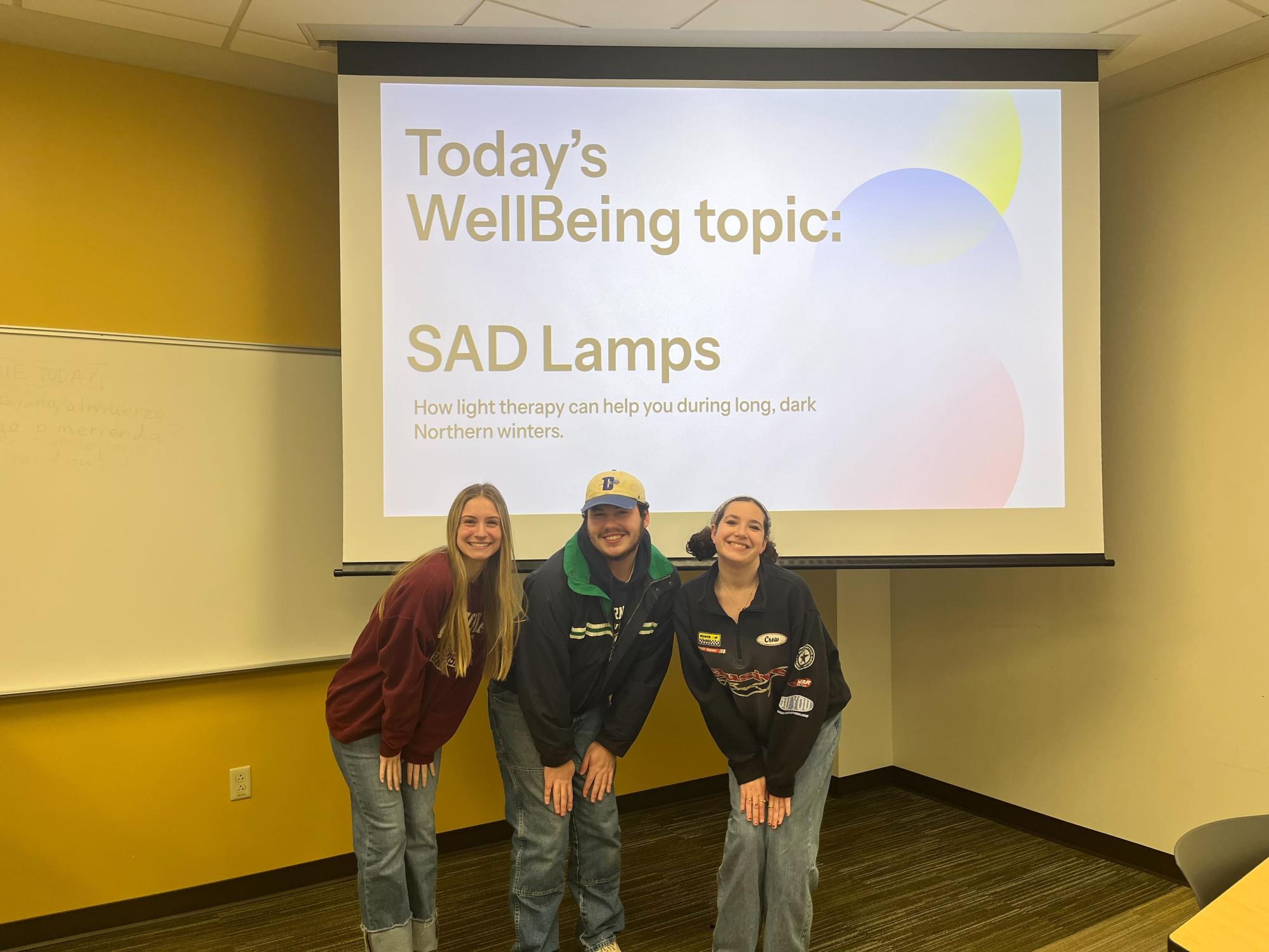
On Wednesday, Jan. 21, NMU’s WellBeing team addressed SAD, explaining what can cause it and how students can overcome it. Emma Wargin, a Well-Being peer educator, first started the presentation by explaining what SAD is, and its symptoms.
“First, you must understand what SAD is. Seasonal affective disorder, or SAD, which is a very fitting name, is a form of depression that occurs during a specific season of the year, most often, fall and winter. It is linked to reduced exposure to sunlight, and it is more than just winter blues,” Wargin said. “It can significantly affect a person’s mental health, energy levels and ability to function in daily life, including school and school activities. Symptoms of seasonal affective disorder may include feeling sad, down or hopeless, low energy, constant fatigue over sleeping or difficulty waking up, trouble concentrating on schoolwork, loss of interest in activities and social withdrawal. These symptoms typically appear in late fall, and we’ll see improvements in the springtime.”
While one can’t wish away the winter season, there are ways a student can help improve their mental health. One of the ways is through SAD lamps. These can be found all over campus, including, but not all: Jamrich Hall, Weston Hall, Hedgecock and Gries Hall.
“What are SAD lamps? SAD lamps are also known as light therapy,” Wargin said. “Lamps are devices designed to mimic natural sunlight, they emit a bright white light that is significantly stronger than in regular indoor lighting. Most SAD lamps provide 10,000 Lux, which is similar to outdoor daylight on a clear morning. Unlike regular lamps, SAD lamps are much brighter. Traditional lighting is usually 300 to 500 Lux, which is not enough to treat SAD, as they’re designed for therapeutic use. They do not have UV light, and they’re designed to have an impact on your brain chemistry and sleep cycles.”
Additionally, it is important to know if one can use a SAD lamp, and if so, how much bright light they can intake, as safety is important. Those with medical conditions need to double check with their doctor first to see if SAD lamps are okay to use as the effects can bring about increased risk. If a student needs to wear sunglasses, has had past eye conditions, or takes specific medications, SAD lamps are not for them.
“I think a lot of people think, ‘Oh, it’s just the same as an indoor light.’ It’s not, and if you have light sensitivity, then it may not be for you. Another big thing for the SAD lamps is do not sleep on your light therapy lamp. Use it once per day, [as it] yields the best results for actually treating SAD,” Wargin said.
As it is a very bright light, it is good to sit about an arm’s length away from the lamp, as it could be harmful when sitting too close. When using a SAD lamp, the recommendation is to bask in it for 20 to 30 minutes before noon, keeping your eyes open, but away from the light. While in the light, students can study, eat, or occupy themselves on their phone. Within a few days, they will most likely feel their focus and concentration improved and motivation increased, allowing students to study better.
Wargin adds to this by saying, “It may help you maintain a better sleep schedule, and you’ll get more feelings of rest, improved mood during winter semester and better stress management during exam periods. We live in the coldest, darkest, snowiest part of America, so this is why we want to emphasize the importance of SAD lamps.”
Danny Powers, a Well-Being peer educator, includes how doing winter activities helps shake off SAD.
“As a snowboard instructor, that’s one of my favorite ways, skiing or snowboarding, any winter activity you can do outside,” Powers said.
While informal resources are good, sometimes they are not always enough. If needed, students can look into WellBeing for more formal resources, such as the Counseling Center to provide them the support they need.
Throughout this winter season, students need to remember the importance of taking care of their mental health, even if that means snuggling up under their cozy covers, sipping hot chocolate and watching a cozy, heart-warming movie.