
Every year, the students in the NMU Biology department play an important role in the Blue Spotted Salamander migration. This year’s migration is predicted to begin early April, and NMU students have begun preparing and implementing new technology
According to the head of the NMU Biology Department Jill Leonard, students are a driving force in this yearly tradition.
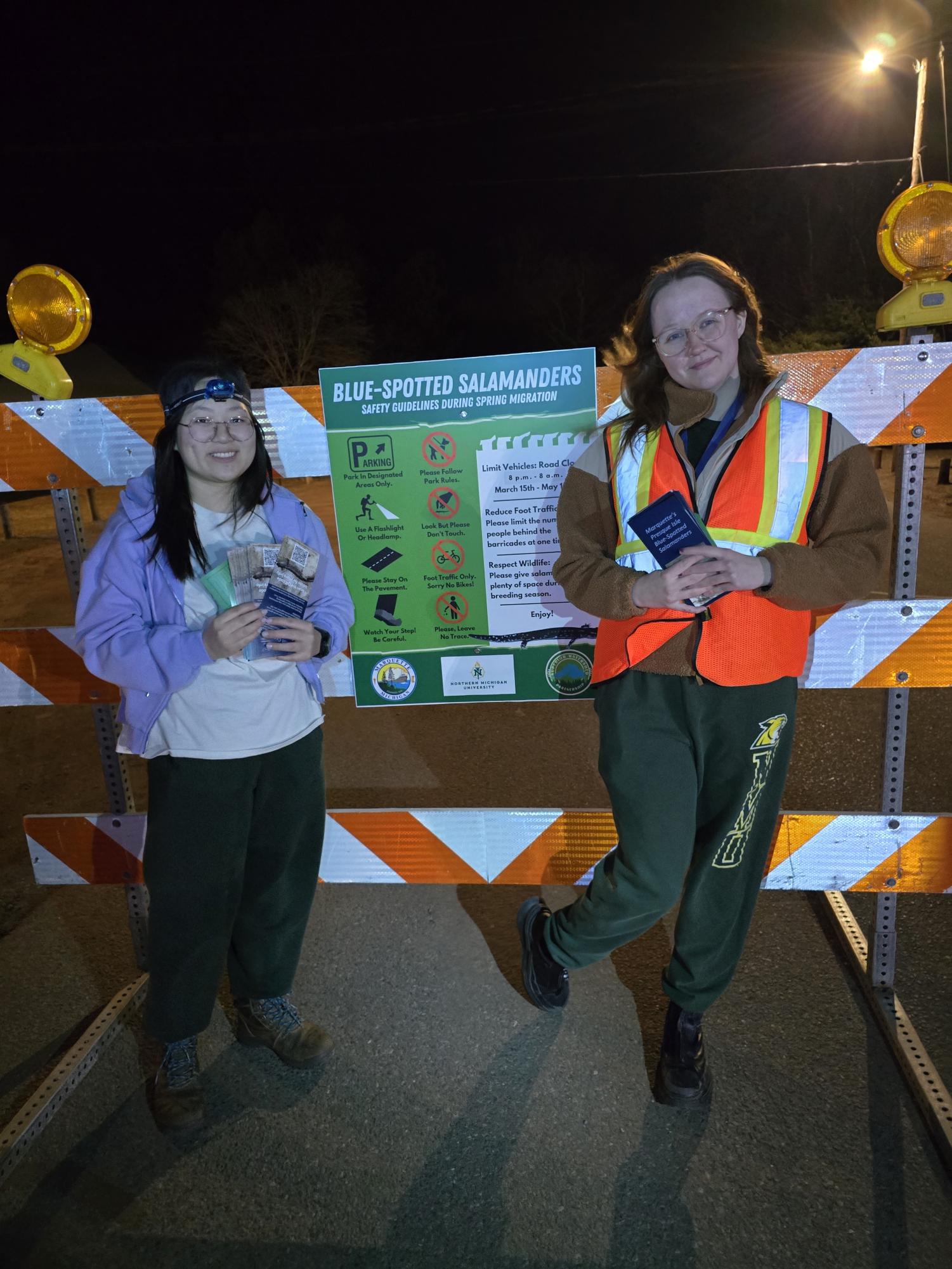
“Each year we train about 200 students to serve as Salamander Stewards and Salamander Rangers,” Leonard said.
Salamander Stewards are public outreach docents who educate the public to ensure that the salamanders are not affected by humans during their migration. Salamander Rangers are part of a research project from the Leonard lab that perform animal counts that help understand migration patterns and how the salamanders are affected by the environment.
This year, new technology is available to students volunteering with the NMU Biology Department.
“For the students, the new piece is a new partnership with EarthRanger. EarthRanger is a global conservation technology non-profit that has helped us develop a phone app for data collection and will provide long-term storage of our data,” Leonard said. “The other new element this year is that we are unveiling a new citizen science project called the Marquette Salamander Migration Project. This project will allow anyone, students or the public, to participate by taking photographs with their phones, and then uploading the photos to iNaturalist to our project page.”
These new efforts will help create databases to keep information and research about the salamanders.
Leonard said that the salamander migration is a great learning opportunity for students.
“For many, it’s their first change to participate in real science and conservation. Nothing we do is tied to a class, it’s real conservation and science work,” she said. “It’s an easy way to find out if they like this type of work. Many times they are learning about how data is collected, responsibilities, and critical thinking as they deal with field work.”