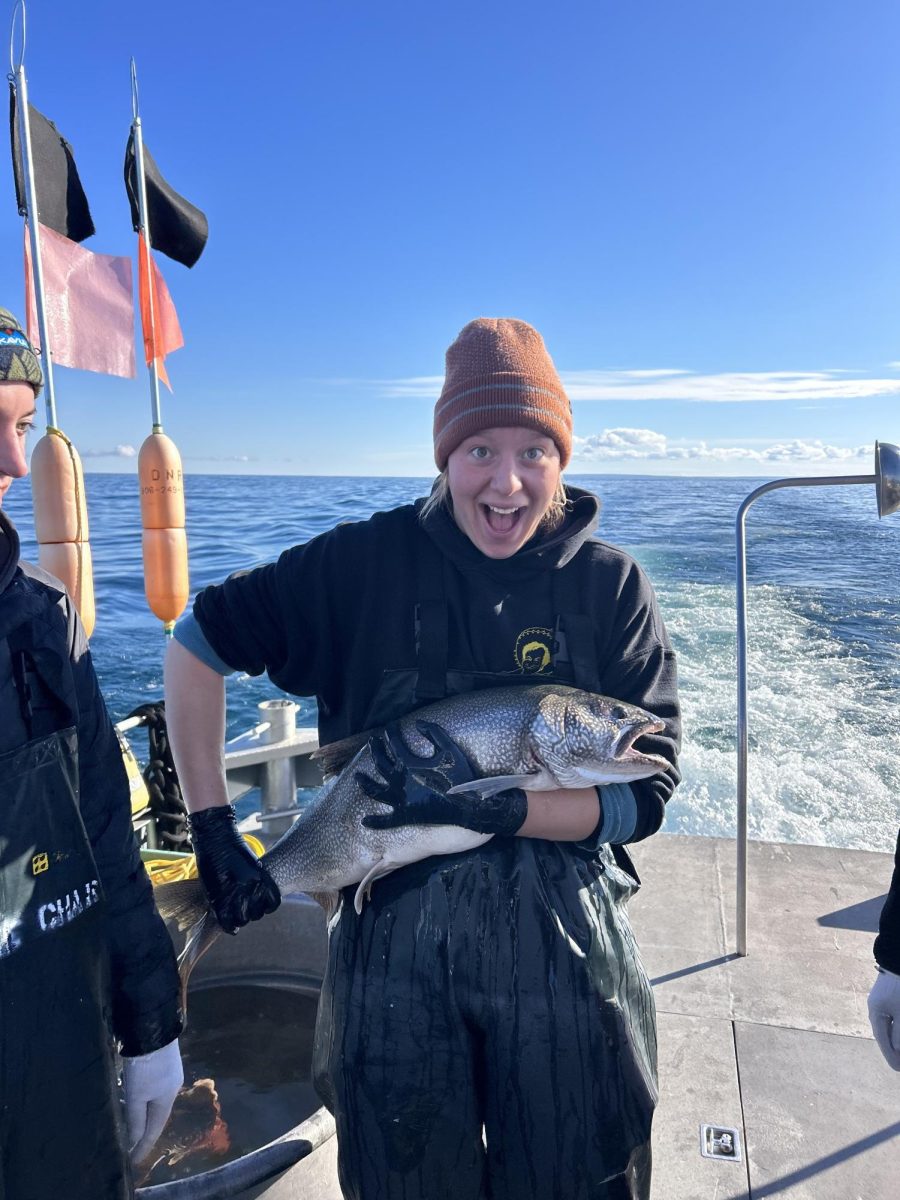
Each semester, NMU students studying natural resource–related fields have the interesting opportunity to dive into real-world science alongside the Michigan Department of Natural Resources (DNR). Under the supervision of Marquette Fisheries Research Biologist Shawn Sitar, students assist with the Lake Superior Fish Trophic Ecology Study, a long-term project examining the diet and biomass of Lake Trout across the largest freshwater lake in the world.
The study focuses on analyzing the stomach contents of Lake Trout to better understand their feeding habits and ecological role. According to senior ecology student Joanne Arbic, who spent the day assisting with the research, the experience has been transformative.
“I’ve learned a great deal from this experience, both through the lab work and field work,” Arbic said. “The opportunity to do meaningful work in an environment that means so much to so many and influences an entire way of life here in the U.P. is very special.”
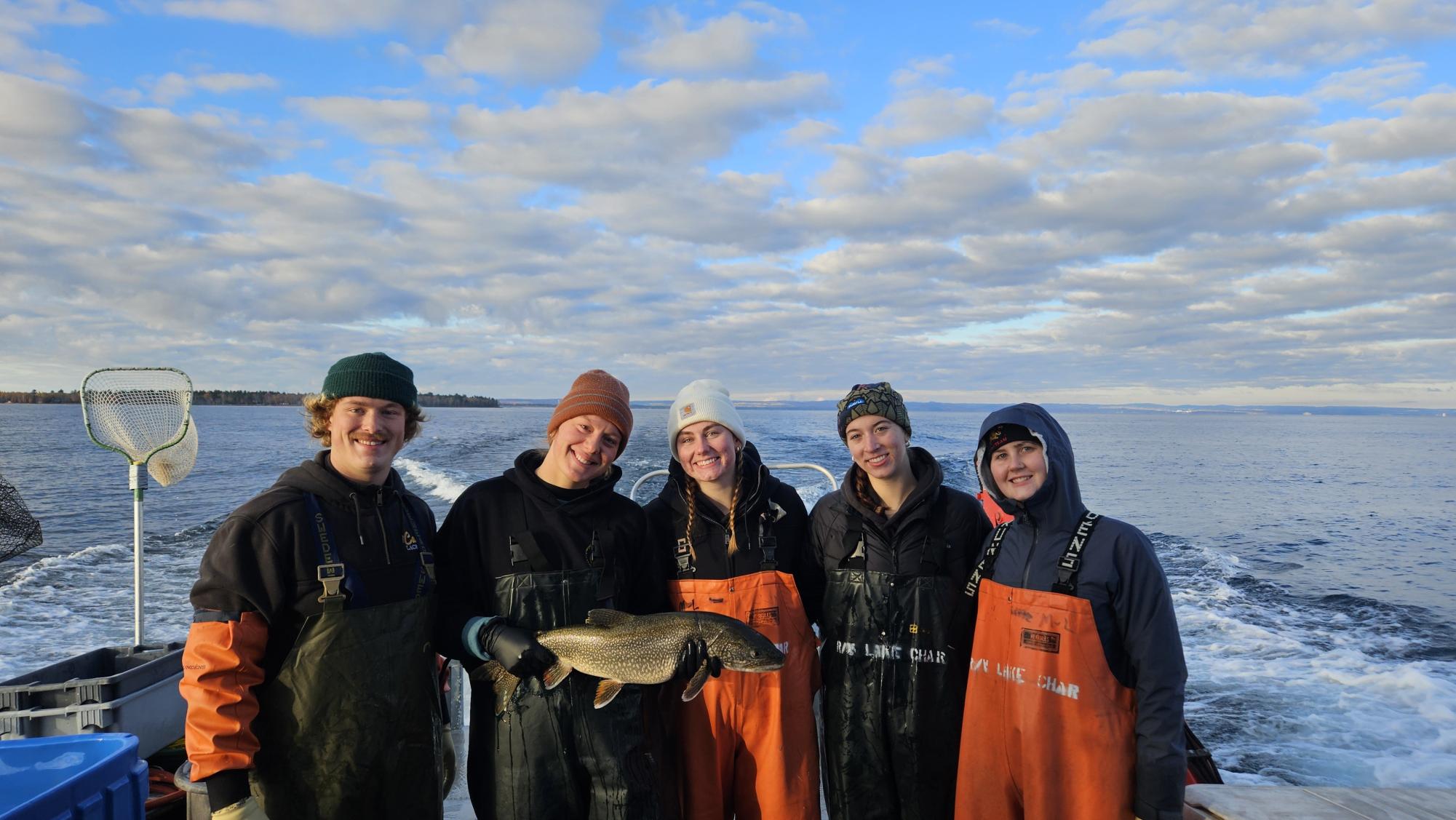
In both fall and spring semesters, students like Arbic and her peers board the DNR research vessel RV Lake Char, which launches from either Marquette’s Lower Harbor or the Munising Marina. The crew travels toward Grand Island to collect several gill nets containing Lake Trout and Whitefish.
Once the fish are brought aboard, students help record critical data including each specimen’s sex, length, weight, and species subtype. Fin clips are also taken for genetic analysis through Michigan State University, while any fish that do not survive are collected for further laboratory study.
“Students on the boat are responsible for taking fin clips, organizing data, and handling and releasing fish,” Arbic explained. “It’s a balance of precision, teamwork, and respect for the life we’re studying.”
Samples from the fish, including stomachs, fins, and otoliths (ear bones), provide insights into the fish’s diet, growth, and environment over time. After data collection, any fish mortalities are cleaned and donated as fillets to a local food pantry, ensuring that no life taken goes to waste.
“In this way, even the fish that are unfortunately killed during the study still contribute to science and to our community,” Arbic said. “They provide both valuable data and healthy meals to Marquette residents.”
Lake Trout hold a particularly vital place in Lake Superior’s ecosystem. As keystone predators, they help maintain a balanced food web by keeping other fish populations in check. Decades ago, however, their numbers plummeted due to overharvesting and invasive sea lamprey. Intensive conservation and management efforts led by the DNR and other agencies have since brought them back from the brink.
In 2024, the Lake Superior Committee officially announced that Lake Trout populations were fully recovered in most areas of the lake, a milestone that Arbic says highlights the importance of ongoing research.
“The more people know and are educated about the kind of work the DNR is doing here in the U.P., the better protected these valuable resources will be for future generations,” she said.
For Arbic, the Lake Superior Fish Trophic Ecology Study is more than a research project, it’s a chance to participate in the stewardship of a globally significant ecosystem.
“This research not only provides incredible learning opportunities for students,” she said, “it directly influences the policies that manage the dynamics of Lake Superior. Watching and learning from veteran scientists has been something I’m incredibly thankful for.”
Through hands-on science and community collaboration, NMU students like Arbic are helping ensure that our beautiful Lake Superior, and its powerful keystone species, continue to thrive for generations to come.